
Hippopotamus
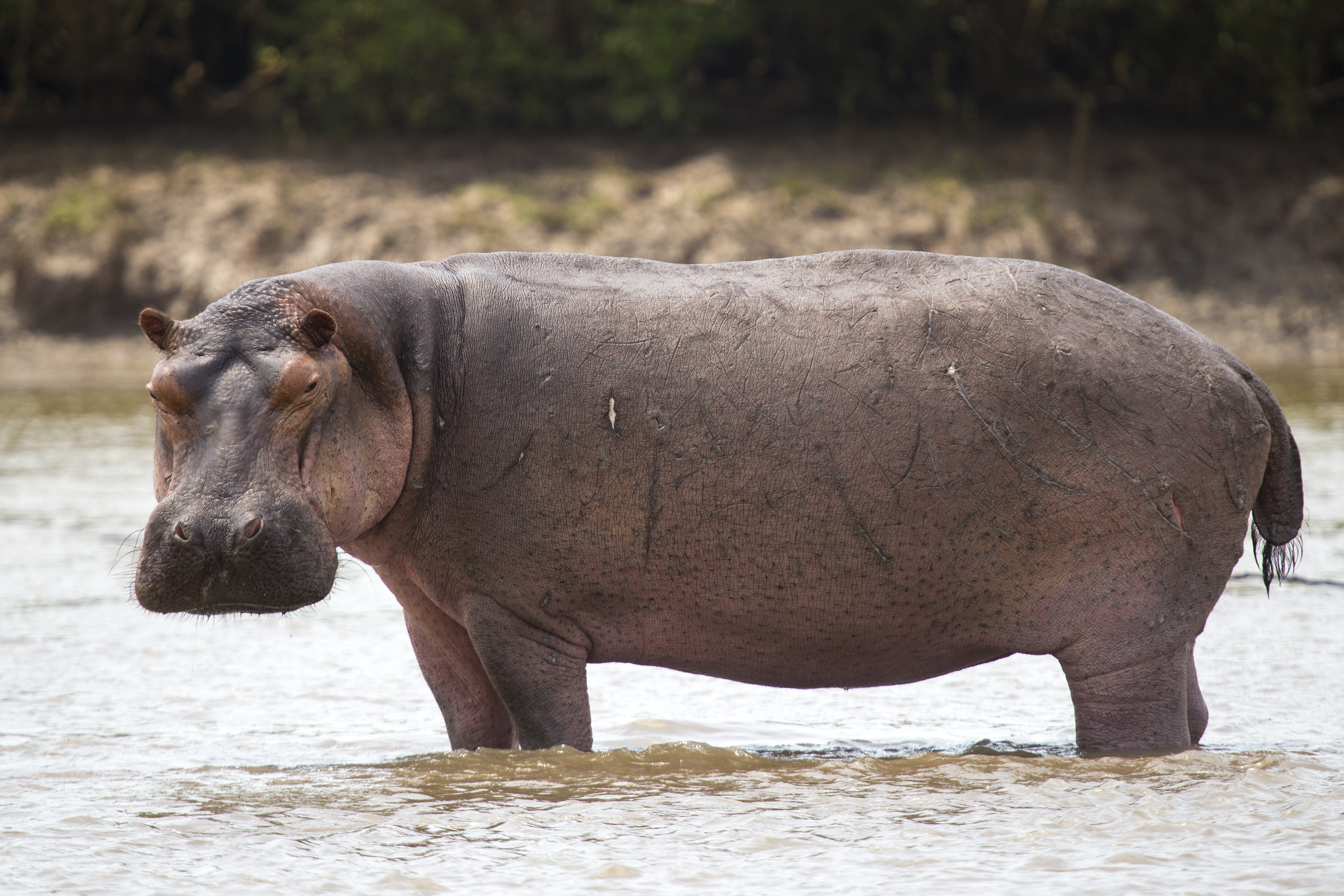
Credit: Muhammad Mahdi Karim · CC BY-SA 4.0
The hippopotamus is a huge mammal that lives in rivers, lakes, and swamps across parts of Africa south of the Sahara Desert. The name means "river horse" in ancient Greek, but hippos are not related to horses. Their closest living relatives are actually whales and dolphins. An adult hippo weighs between 3,000 and 4,000 pounds, about as much as a small pickup truck. Only elephants and some rhinos are heavier land animals.
Hippos have barrel-shaped bodies, short legs, and enormous heads. Their mouths can open almost four feet wide. Inside are curved tusks that keep growing for a hippo's whole life. The biggest tusks can reach 20 inches long, longer than a school ruler. Hippos use these tusks to fight each other, not to chew food. They eat grass, which they grind with flat back teeth.
Even though they spend most of the day in water, hippos cannot swim. Instead, they walk along the bottom of rivers and push off with their feet. A hippo can hold its breath for about five minutes. Its eyes, ears, and nostrils sit on top of its head, so it can see, hear, and breathe while the rest of its body stays hidden. When a hippo dives, special flaps close its nostrils and ears to keep water out.
Hippos stay in the water during the day because their skin burns easily in the sun. At night they come onto land to eat. A single hippo can munch through 80 pounds of grass in one night. They often walk several miles from the water to find a good feeding spot, following the same paths for years.
Hippos look slow and calm, but they are one of the most dangerous large animals in Africa. They are very protective of their territory and their young. A mother hippo with a calf will charge anything that comes too close, including boats. Despite their size, hippos can run 20 miles per hour on land, faster than most people can sprint.
Baby hippos are often born underwater. A newborn weighs around 100 pounds and can swim before it can walk. It nurses underwater too, closing its nostrils and ears to drink its mother's milk.
Hippos are listed as vulnerable, which means their numbers are dropping. Scientists think only about 115,000 to 130,000 remain in the wild. They are losing habitat as people take water from rivers for farms, and some are killed illegally for their meat and their ivory tusks. Protected parks in countries like Uganda, Zambia, and Tanzania now give hippos some of their safest homes.
Related
Last updated 2026-04-22