
Mastodon
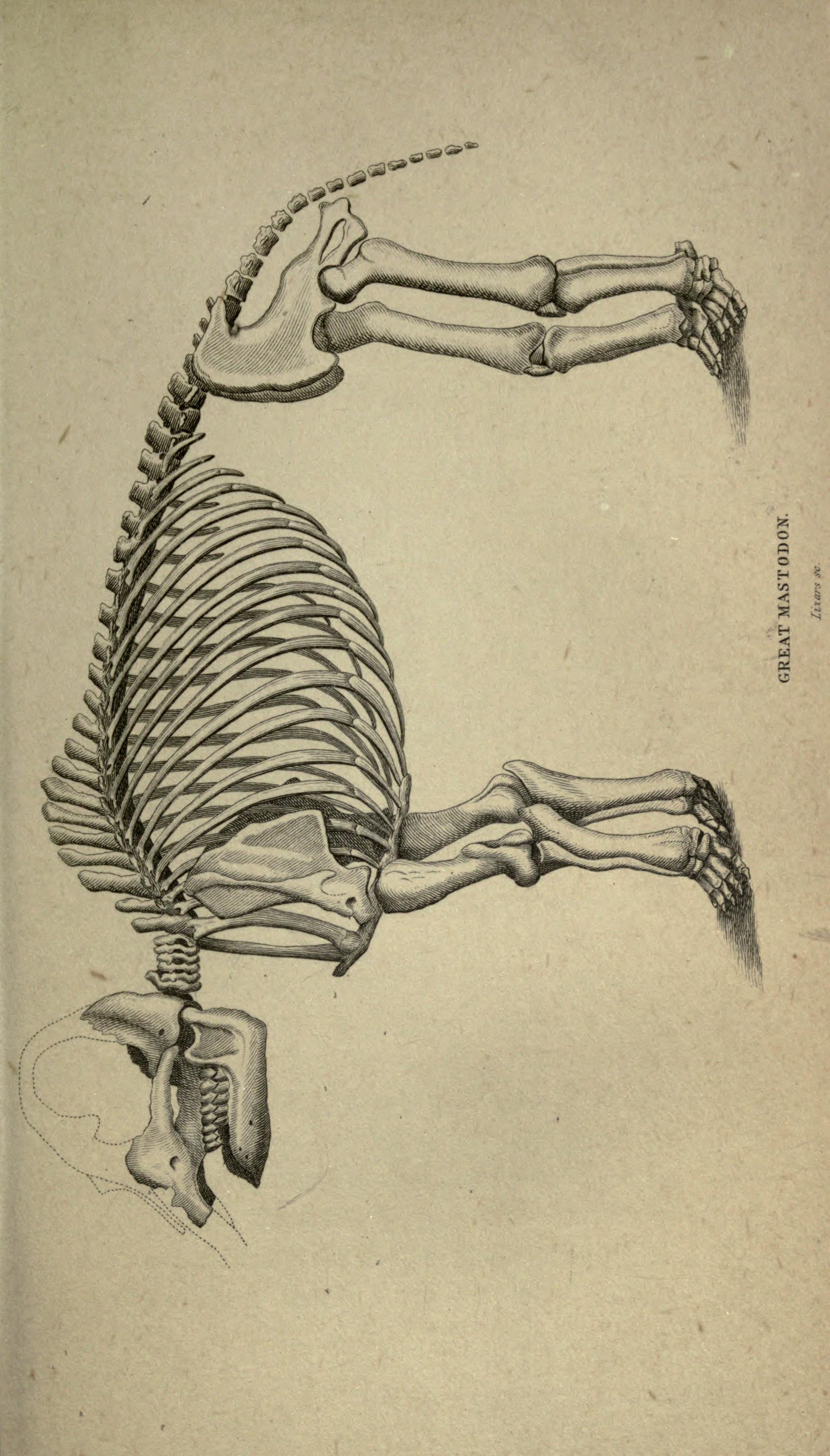
Credit: Sir William Jardine · Public domain
The mastodon was a large, extinct animal that looked a lot like an elephant. It lived in the forests of North America and Central America. Mastodons walked the Earth for millions of years. The last ones died out about 11,000 years ago, near the end of the last Ice Age. Scientists have learned about them from thousands of bones and tusks found in swamps, lakes, and fields.
Mastodons were big, but not as big as their cousins the woolly mammoths. A full-grown mastodon stood about 8 to 10 feet tall at the shoulder. That is a little taller than a basketball hoop. It weighed around 4 to 6 tons, about as much as two or three cars stacked together. Mastodons had thick brown fur to keep them warm. They had long, curved tusks that could stretch more than 8 feet.
Mastodons were not the same animal as mammoths, even though they lived at the same time and looked alike. Mammoths were taller and had flatter teeth for eating grass. Mastodons had bumpy teeth shaped like the tops of mountains. These teeth were built to crush twigs, leaves, and pine cones. That is why mastodons lived in forests, while mammoths roamed open grasslands.
Mastodons shared their world with other Ice Age giants. Saber-toothed cats, giant ground sloths, dire wolves, and short-faced bears lived in the same forests and plains. Early humans also lived alongside mastodons after people came to North America. Archaeologists have found mastodon bones with stone spear points stuck in them, which shows that people hunted these huge animals for food.
Then, about 11,000 years ago, mastodons vanished. Scientists still argue about why. Some think a warming climate changed their forests and left them with less food. Others think human hunters killed too many of them. Many researchers think it was a mix of both. The debate is far from over, and new discoveries keep adding clues.
Mastodon fossils turn up all over North America, from Alaska to Florida. In 1801, a painter and museum owner named Charles Willson Peale dug up a nearly complete mastodon skeleton in New York. It was one of the first big fossil finds in American history. People came from miles away to see it. The skeleton helped convince scientists that animals really could go extinct, an idea that was still new and surprising at the time.
Related
Last updated 2026-04-22