
Sea Otter
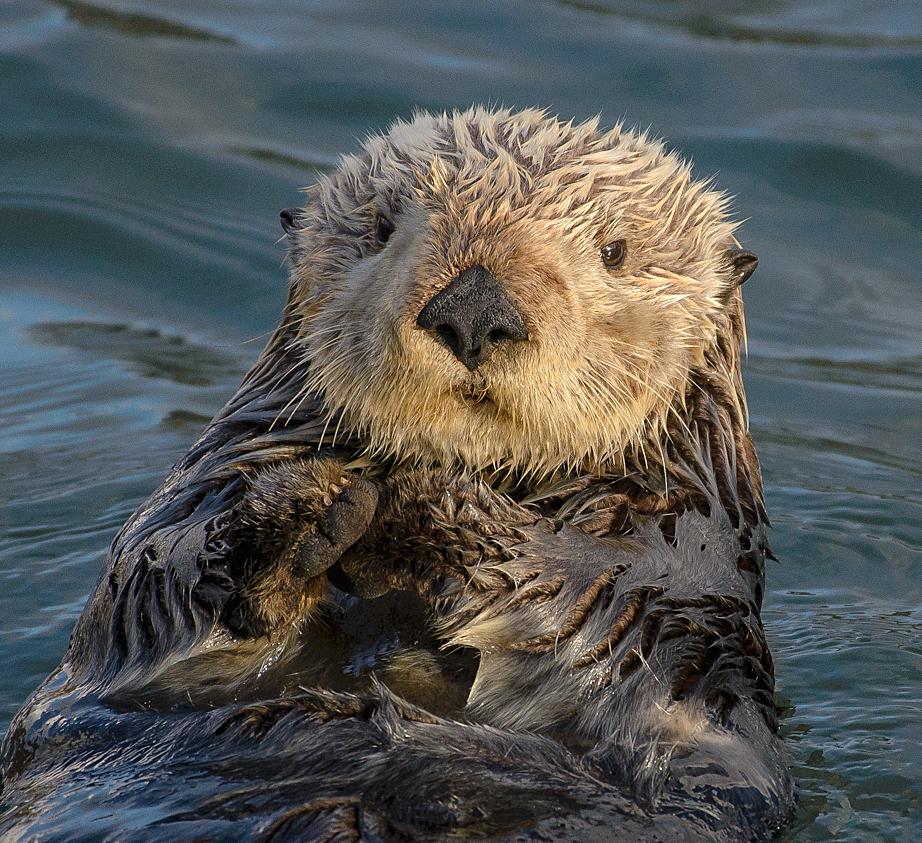
Credit: Marshal Hedin from San Diego · CC BY-SA 2.0
The sea otter is a marine mammal that lives along the Pacific coasts of North America and Asia. It is the heaviest member of the weasel family but one of the smallest ocean mammals. Adults usually weigh 45 to 90 pounds and grow about four feet long. Unlike seals and whales, sea otters spend almost their whole lives at the surface, floating on their backs in cold coastal waters.
Most ocean mammals stay warm with a thick layer of fat called blubber. Sea otters do not have blubber. Instead, they rely on fur. A sea otter has up to a million hairs in every square inch of skin, which is more than any other animal. The outer hairs trap a layer of air against the inner fur, keeping the cold water away from the otter's skin. To work, the fur has to stay perfectly clean, so sea otters spend hours every day grooming themselves.
Sea otters eat a lot. Each one eats about a quarter of its body weight every day to fuel its fast metabolism. Their favorite foods include sea urchins, clams, mussels, crabs, and snails. To crack open hard shells, a sea otter uses a rock as a tool. It floats on its back, sets the shell on its belly, and smashes it with the rock. Sea otters are one of the few non-primate animals that use tools this way.
Mothers carry their pups on their chests as they float. A baby sea otter's fur is so fluffy that the pup cannot sink, even if it tries. When the mother dives for food, she sometimes wraps her pup in kelp so it does not drift away.
Sea otters are also a keystone species, meaning they hold their whole ecosystem together. They eat sea urchins, and sea urchins eat kelp. Without enough otters, urchin numbers explode and they chew down entire kelp forests. With otters around, kelp forests thrive, and hundreds of other species thrive with them.
Humans nearly wiped sea otters out. In the 1700s and 1800s, fur hunters killed so many that fewer than 2,000 were left worldwide by 1911. That year, several countries signed a treaty to protect them. The population has slowly climbed back to around 125,000, but sea otters are still listed as endangered. Oil spills are especially dangerous, because oil ruins the fur that keeps them warm.
Today, people can watch sea otters in places like Monterey Bay in California and the coast of Alaska. Holding hands while they sleep, floating in groups called rafts, they are some of the most beloved animals in the ocean.
Related
Last updated 2026-04-22