
Predator and Prey
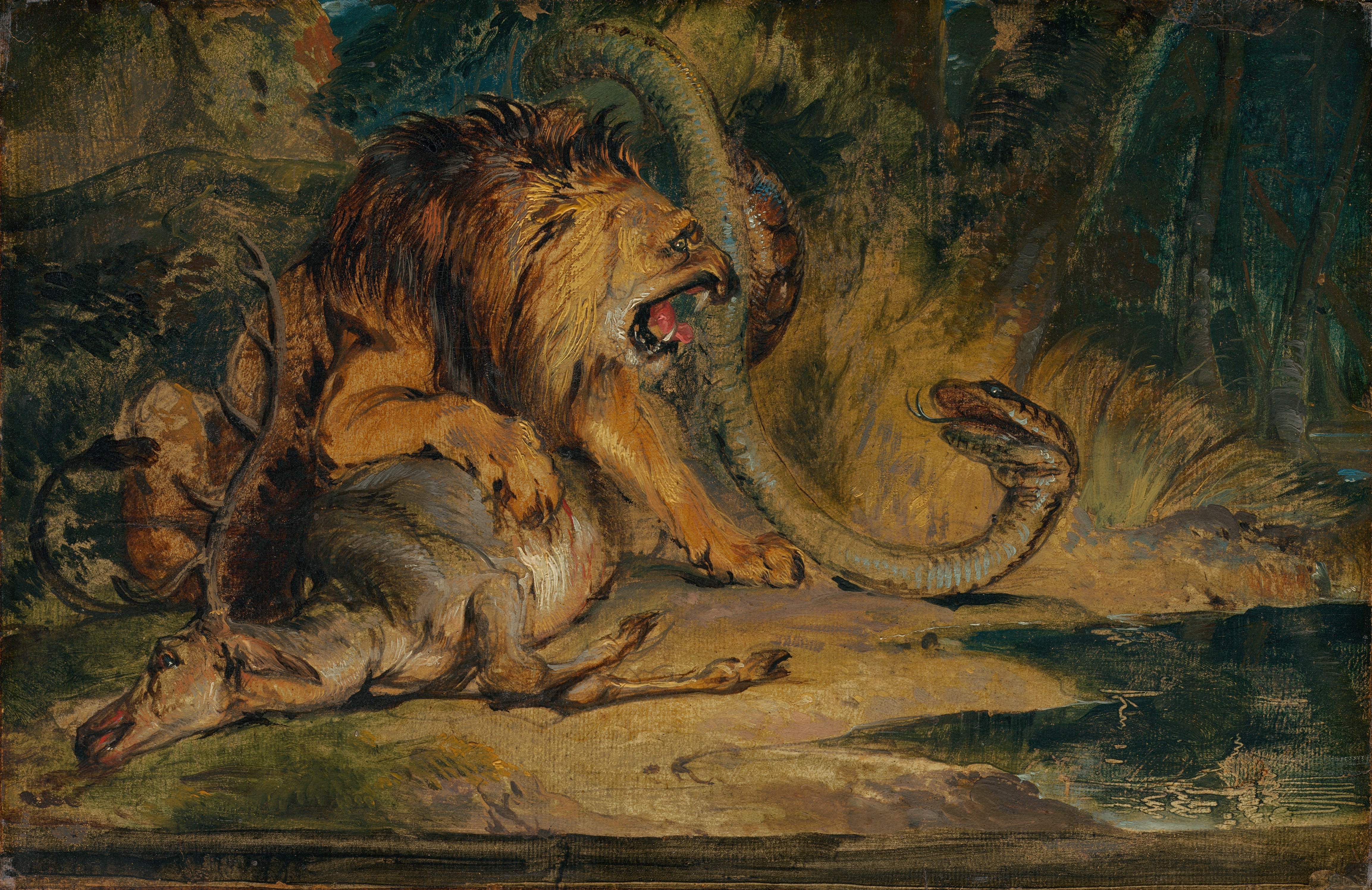
Credit: Edwin Landseer · Public domain
A predator is an animal that hunts and eats other animals. The animals it hunts are called prey. This relationship is one of the most important in nature. It shapes how animals look, move, and behave. It also keeps ecosystems in balance.
Almost every habitat on Earth has predators and prey. A lion hunts a zebra on the African grasslands. A wolf chases a deer through a forest. A hawk dives at a mouse in a field. Even tiny creatures take part. A ladybug eats aphids off a leaf, and a spider traps flies in its web.
Predators have special tools for hunting. Many have sharp teeth, claws, or beaks. Owls have eyes that can spot a mouse in near darkness. Sharks can smell a drop of blood from hundreds of feet away. Cheetahs have long legs and a flexible spine that let them sprint faster than 70 miles per hour, about as fast as a car on the highway.
Prey animals have their own tools for staying alive. Some run fast, like gazelles and rabbits. Some hide using camouflage. A stick insect looks almost exactly like a twig. A flounder can change color to match the ocean floor. Other animals stay safe in groups. A school of fish moves as one flashing shape, which makes it hard for a predator to pick a single target. Zebras stand together so their stripes blur into one big pattern.
Some prey animals fight back. A porcupine has 30,000 sharp quills. A skunk sprays a smelly liquid that can be noticed a mile away. Poison dart frogs carry venom in their bright skin, and their colors warn predators to stay away.
Predators and prey shape each other over long stretches of time. Fast predators push prey to get faster too. Sneaky predators push prey to grow better senses. This slow back-and-forth change, over many generations, is part of how natural selection works.
Predators also help keep nature healthy. When wolves were brought back to Yellowstone National Park in 1995, the elk herds became more careful and stopped overeating young trees. The trees grew back. Beavers returned to build dams. Even the rivers changed shape.
Humans are predators too. People have hunted animals for food for hundreds of thousands of years. Today, most people get their meat from farms, but hunting and fishing still shape many wild animal populations. Scientists study predator and prey numbers carefully, because losing one side can throw a whole ecosystem out of balance.
Last updated 2026-04-23