
Zero Gravity
Credit: NASA · Public domain
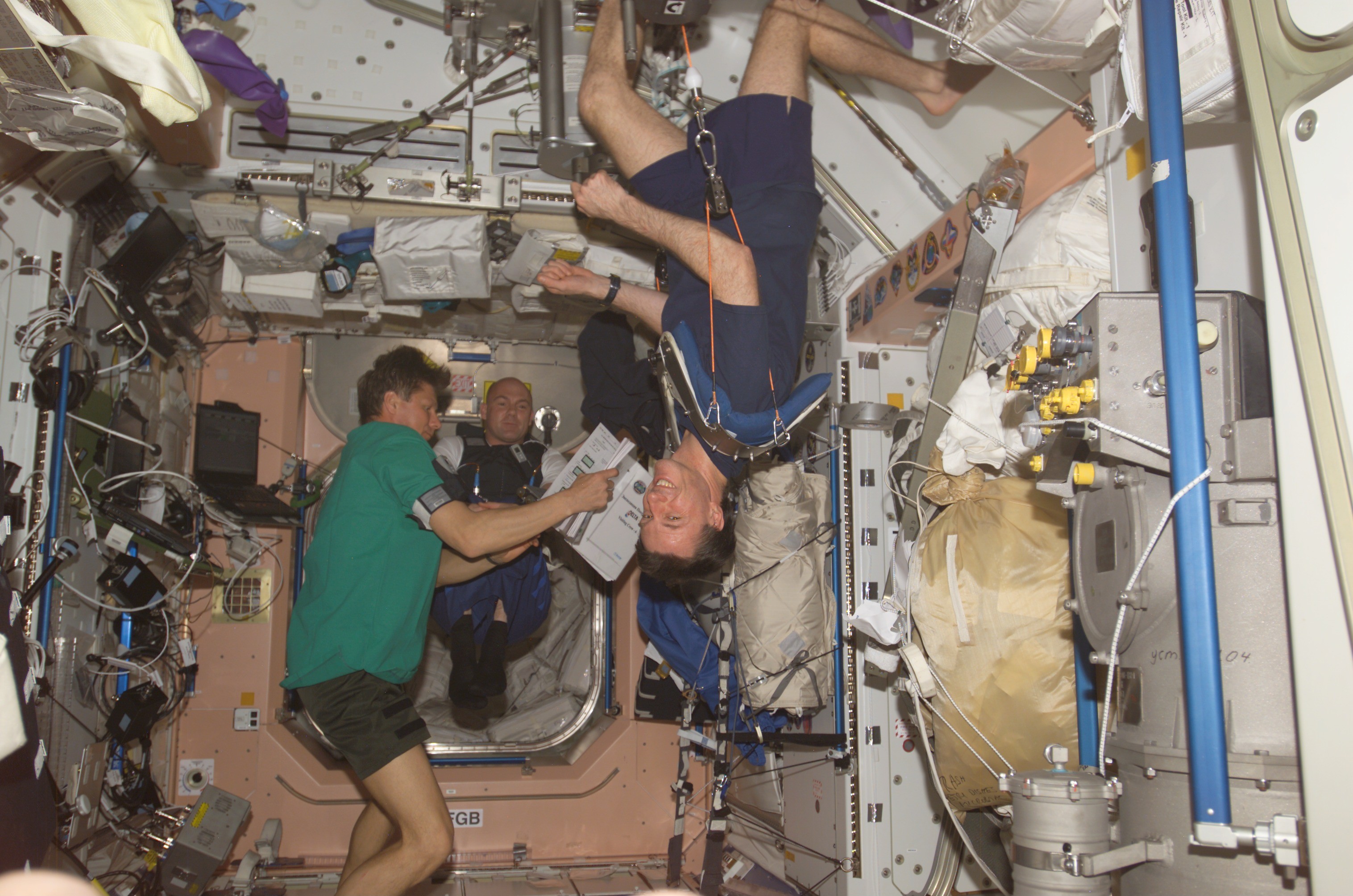
Zero gravity is what people call the floating feeling astronauts have in space. The name is a little misleading. Gravity is still there, even on the space station. A better name for it is "microgravity," which means very small gravity effects. Astronauts float because they are falling around Earth, not because gravity has switched off.
Here is how it works. The International Space Station orbits about 250 miles above Earth. At that height, gravity is still almost as strong as it is on the ground. So why don't astronauts feel it? Because the station and everyone inside it are falling toward Earth at the same time. The station moves sideways so fast, about 17,500 miles per hour, that it keeps missing the ground as it falls. That endless "falling around Earth" is what we call an orbit.
When you fall, you feel weightless. You can test this on a roller coaster that drops straight down. For a moment, your stomach lifts and objects float next to you. Astronauts feel that way all the time.
Floating sounds fun, and it is, but it also causes problems for the human body. Without gravity pulling on them, muscles get weaker. Bones lose minerals and grow thinner. Blood pools in the head instead of the legs, which makes astronauts' faces look puffy. To fight these changes, astronauts on the space station exercise about two hours every day using special machines strapped to the floor.
Everyday life in microgravity is strange. Water does not pour. It floats in wobbly balls that you have to chase with your mouth. Astronauts sleep in sleeping bags tied to the wall so they don't drift into equipment. Salt and pepper come as liquids, because loose grains would float into someone's eye or into a computer fan. Even going to the bathroom requires a special toilet that uses suction instead of gravity.
You don't have to go to space to feel microgravity for a few seconds. NASA uses a special airplane, nicknamed the "Vomit Comet," that flies in big up-and-down arcs. During each dive, everyone inside floats for about 25 seconds. Astronauts train in it, and scientists use it to test experiments before sending them to the space station.
True zero gravity, where no gravity pulls at all, does not really exist anywhere in the universe. Every object with mass pulls on every other object. The pull just gets weaker with distance.
Related
Last updated 2026-04-22